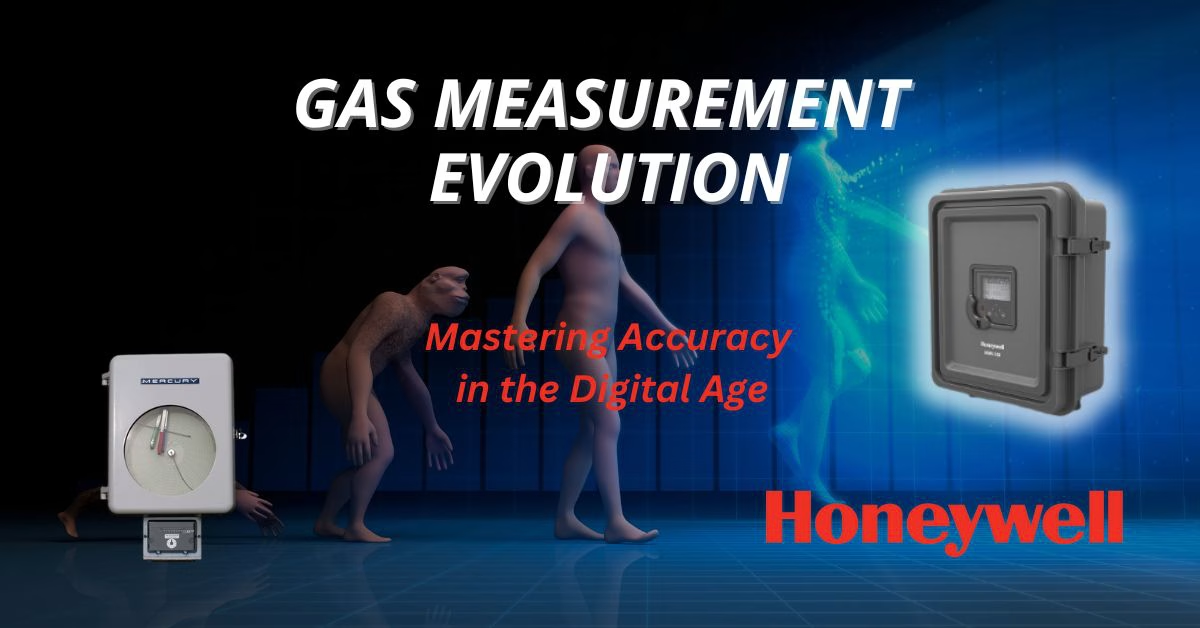
Accurate natural gas measurement is crucial in today’s energy landscape. Volume correction, the process of converting a gas meter’s uncorrected volume to a corrected volume based on temperature and pressure effects, is vital in enhancing measurement precision. This correction significantly improves the accuracy of natural gas measurement, which is essential for custody transfer and billing in our increasingly data-driven industry.
Natural Gas Measurement
Previous discussions have explored the evolution of natural gas meters and their improving accuracy. As industry needs evolved, meters were developed for various applications. However, our deepening understanding of gas laws—particularly how pressure and temperature influence flow measurement—has driven innovation towards more sophisticated volume correction methods for pressure and temperature.
Custody transfer refers to a metering point where natural gas is measured for sale and ownership transfers between parties. In fiscal metering, accuracy is not just a preference but a strict requirement governed by industry standards, government regulations, custody contracts, and metrology standards. In 2024, these requirements are more stringent than ever, reflecting the high stakes in energy transactions.
Mechanical Correction
The gas industry’s journey toward accuracy began with mechanical devices. In the 1950s, innovations like chart recorders and mechanical and volume correctors laid the groundwork for modern measurement techniques. While these technologies are now largely obsolete, understanding their principles helps appreciate current digital solutions.
The gas industry set out to design devices that would adjust for the effects of pressure and temperature. In the 1950s, some of those mechanical devices were chart recorders and mechanical correctors or volume correctors.
Electronic Correction

The 1980s saw a paradigm shift with the introduction of electronic volume correctors (EVCs) by companies like Mercury Instruments (now Honeywell Mercury). These devices, essentially ruggedized computers, compensated for real-time temperature, pressure, and gas compressibility. By 2024, EVCs have become more sophisticated, with improved accuracy and additional features. Some may incorporate advanced data analytics for predictive maintenance, though specific implementations vary by manufacturer.
Audit Trail, Telemetry, and Wireless
The 1990s brought significant advancements: audit trails for data integrity, modems for remote data transmission, and the dawn of wireless communication. Fast-forward to 2024, and we see a fully integrated ecosystem of smart meters, audit trails, and real-time data transmission, revolutionizing the industry’s approach to measurement and data management.
Today’s Electronic Correctors and Electronic Converters
Today, electronic correctors are the cornerstone of advanced gas measurement systems. They seamlessly integrate with Internet of Things (IoT) platforms, perhaps even leveraging artificial intelligence for predictive analytics. Modern correctors not only perform volume correction but also provide real-time insights into energy consumption patterns, enabling utilities to optimize their operations and offer personalized services to customers.
Cutting-edge Solutions from Honeywell Mercury
As we look to the future, the gas measurement industry continues to evolve. Emerging technologies like quantum sensors and edge computing promise even greater accuracy and efficiency. For those interested in staying at the forefront of this technology, Honeywell Mercury offers cutting-edge solutions like the EC350 Volume Converter and MiWi350 Volume Corrector.
Contact us to learn how these advanced systems can transform your gas measurement operations.