

Monitoring compressed air flow in industrial settings with a compressed air flow meter helps manufacturers save energy, cut costs, and improve efficiency and performance.
What is compressed air?
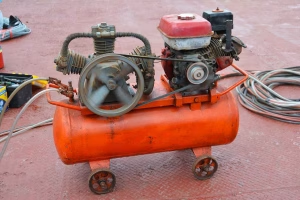
Compressed air is the air that has been condensed or compressed to a pressure higher than the atmosphere. To make compressed air, you’d reduce a given air mass to a smaller space. Now, in a smaller area, the condensed air produces more pressure as the gas tries to return to its previous volume.
Compressed air is the fourth utility after electricity, natural gas, and water. The user generates the utility, though, when evaluating the cost per unit of energy, compressed air is more costly than other traditional energy sources.
Why do we use compressed air flow?
Compressing air in a system to 100 PSIG (7 bar) is a good energy source. It is preferred over electricity because it is clean, simple, efficient, convenient, and safe. For this reason, compressed air fuels numerous industrial applications. It also represents approximately 10% of the energy used in industrial applications globally.
What is process air?
Compressed air is called process air when it is in a process.
Where is compressed air used?
| Industrial Applications | Industries that Manufacture Compressed Air for their Systems | Process Air Applications |
|
|
|
Why monitor compressed air flow?
Compressed air requires more electricity than most industrial equipment. Usually, it accounts for about a third of the electrical use in an industrial environment, making compressed air a pivotal component in any manufacturer’s production process and quickly impacting its bottom line.
Compressed air is not only expensive, but it’s also usually wasted. In any unoptimized system where problems such as leaks, pressure drops, and excessive pressure exist, 30% of the compressed air is likely lost.
Compressed air leakage commonly goes unnoticed in many industrial environments because it doesn’t create a distinguishable mess. Other equipment usually drowns out compressed air hissing from leaks, while water and oil leaks form a puddle and natural gas leaks smell.
Compressed air energy-saving tips
Identify Leaks in Compressor Systems
The tiniest leak in a compressor system can be undetectable, and the cost can be staggering. A small leak can quickly increase the manufacturer’s expense by $20,000 per year.
[For example, if a compressor system runs at 100 PSI and has a total leak opening(s) of ¼”, it would pass 100 cubic feet per minute of compressed air. Assuming it passes 24 hours/day over a year, the facility’s expense would exceed $20,000 yearly (based on $0.12/KW/hour).]
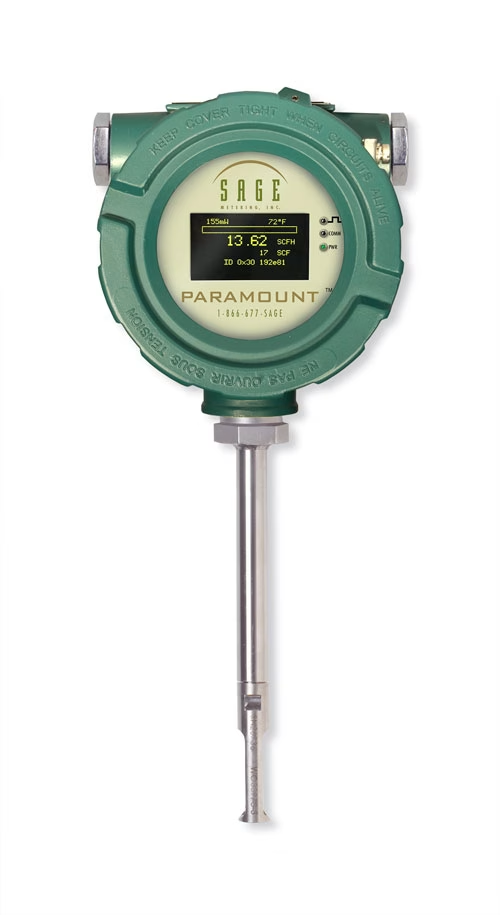
A thermal mass flow meter has low-end sensitivity and can detect if a compressor system is leaking. The Sage Meter can measure direct mass flow as low as 5 SFPM (or 1 SCFM in a 6-inch pipe).
Compressed Air Flow Meters
A thermal mass meter is an excellent compressed air flow meter for industrial applications. It can help determine when and where compressed air is used, identify waste, and improve operational efficiency.
Using multiple air compressors and knowing the flow rate from each can help optimize compressed air distribution and determine the compressors’ efficiency. Optimizing compressed air flow may postpone the need to buy a new compressor. The measurements will also help size a new compressor when it is time to purchase. Air mass flow measurements may also inform the user if shutting down a compressor during reduced airflow periods is appropriate.
A thermal mass flow meter has low-end sensitivity and can detect if a compressor system is leaking when the system is off. The Sage Meter can measure direct mass flow as low as 5 SFPM (or 1 SCFM in a 6-inch pipe).
Compressed Air Monitoring Systems
Sage Metering manufactures Paramount and Prime in insertion-style configurations with an isolation assembly valve to accommodate easy installation and onsite calibration verification. The Sage Meters are the perfect devices to detect compressed air leaks, and with Modbus-compliant communications, they are ideal for complex energy management systems.
You can find more information about monitoring and measuring gas mass flow on this Sage Metering flowmeter technical note.
Image by terimakasih0 and Rudy and Peter Skitterians from Pixabay