Guidelines for developing an Operator Qualification Plan
In my earlier post, What is Operator Qualification? I shared the government mandates that operators qualify employees or contractors who operate or maintain small distribution systems within the oil and gas industry. The PHMSA has set up guidelines to help small distribution operators and master meter system operators develop an Operator Qualification plan.
“Operators are required to prepare and follow an OQ program by federal regulations at 49 CFR 192 Subpart N and 49 CFR 195 Subpart G, as well as regulations adopted by some states.”
The first step in any OQ plan is to identify those parties involved, and according to PHMSA, they are any “employee of the operator or an employee of a contractor hired by the operator, who performs covered operations or maintenance activities on the piping system.”
The OQ program must identify the related tasks each person performs and then make sure they are tested and are capable of performing each of their covered tasks. The OQ process must be in writing, and during any inspection, the records (or tests) must be provided to state or federal pipeline safety inspectors.
The regulations require that operators prepare and follow a written OQ protocol and meet a minimum of these provisions1:
- Identify covered tasks

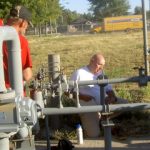
Linc Energy Systems offers a sufficient balance between hands-on and classroom instruction in their OQ Training. - Evaluate individuals performing covered tasks to demonstrate they are qualified
- Allow individuals who are not qualified to perform a covered task if directed and observed by a qualified individual.
- Evaluate an individual if there is a reason to believe the individual’s performance of a covered duty contributed to an incident
- Evaluate an individual if there is a reason to think the individual is no longer qualified to perform a covered task
- Communicate changes that affect covered tasks to individuals performing those covered tasks
- Establish re-evaluation intervals
- Describe how training will be used in the OQ program when appropriate (e.g., new hires, refresher training for existing employees who transfer to new jobs or fail evaluations, etc.).
Additionally, the written OQ plan should:
- Name the person who will be responsible for ensuring the requirements of the project be carried out;
- Identify the records necessary to carry out the program and where the documents will be stored.
The apparent reason for such regulations is to reduce accidents caused by human error. I expand further in Operator Qualification Program Provision 1: identify covered tasks.
Linc Energy Systems offers a sufficient balance in our OQ Training classes between hands-on and classroom instruction.