
Gas Filtration in Multiple Phases of Natural Gas Production
Raw natural gas from the drilling process is far from clean and requires filtration in various gas production phases, including drilling, treatment, transmission, and distribution.
After extracting the raw natural gas from drilling, to make it commercially usable, the gas goes through multiple filtration processes to remove impurities and make it safe. Among the contaminants may be ethane, propane, butane, pentanes, water vapor, hydrogen sulfide (H2S), carbon dioxide (CO2), helium (He), nitrogen (N), and other compounds.
There are many natural gas production steps, and in each phase, filtration of the natural gas is necessary.
Natural Gas Drilling
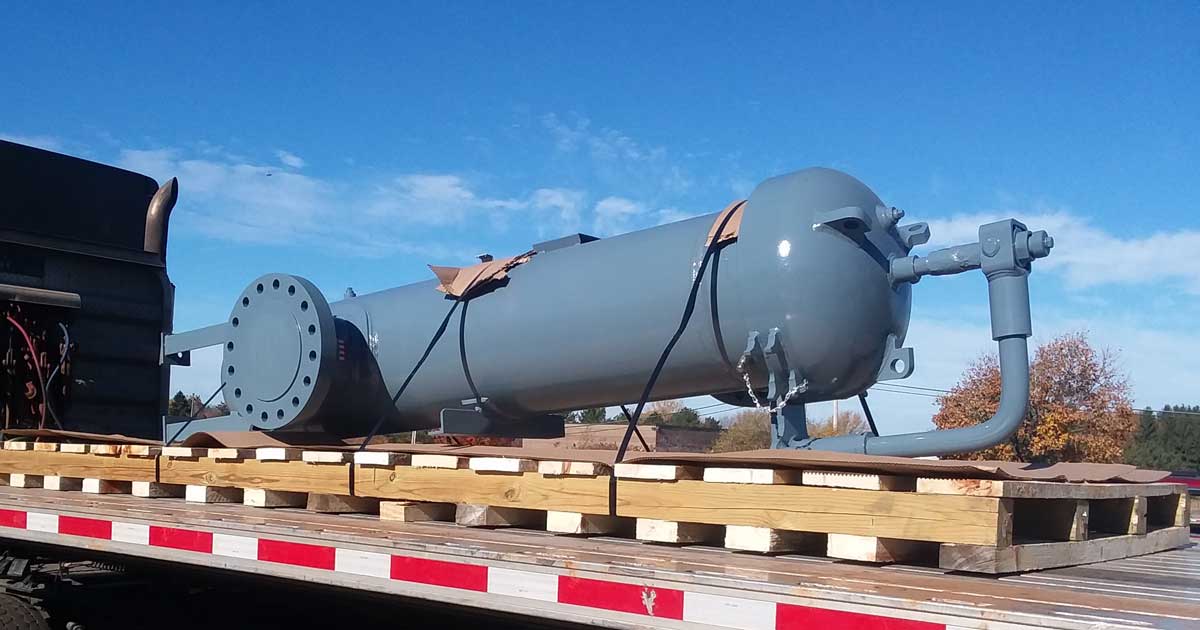
Shawndra R50 Coalescing Gas Filter
After drilling a well, natural gas rises to the surface naturally. The gas coming from the earth is full of contaminants. Solids and liquids, such as sand, dust, and water are removed by filtering with particulate and coalescing filters. If they weren’t, these solids would likely damage the compressors. After gas compression, the natural gas goes through another filtration to remove compressor lube oil and is then transported to treatment facilities.
Treatment of Natural Gas
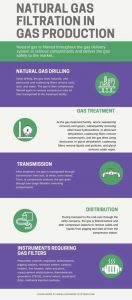 Natural gas uses multiple filtration processes at treatment facilities to remove hydrocarbons, water vapor, contaminants, and acid gas. The methane needs to be filtered and treated before transportation, and among the treatment processes are:
Amine Sweetening removes acid gases like hydrogen sulfide (H2S) and carbon dioxide (CO2) by subjecting the natural gas to amines and subsequently removing other trace hydrocarbons before the gas flows to the stripper.
Desiccant Dehydration is a process where coalescing filters remove unwanted contaminants, and the gas is dried using desiccants like a molecular sieve or silica gel.
Glycol Dehydration is a process where coalescing filters remove liquids and particles, and glycol removes water vapor.
Natural Gas Transmission (Pipeline)
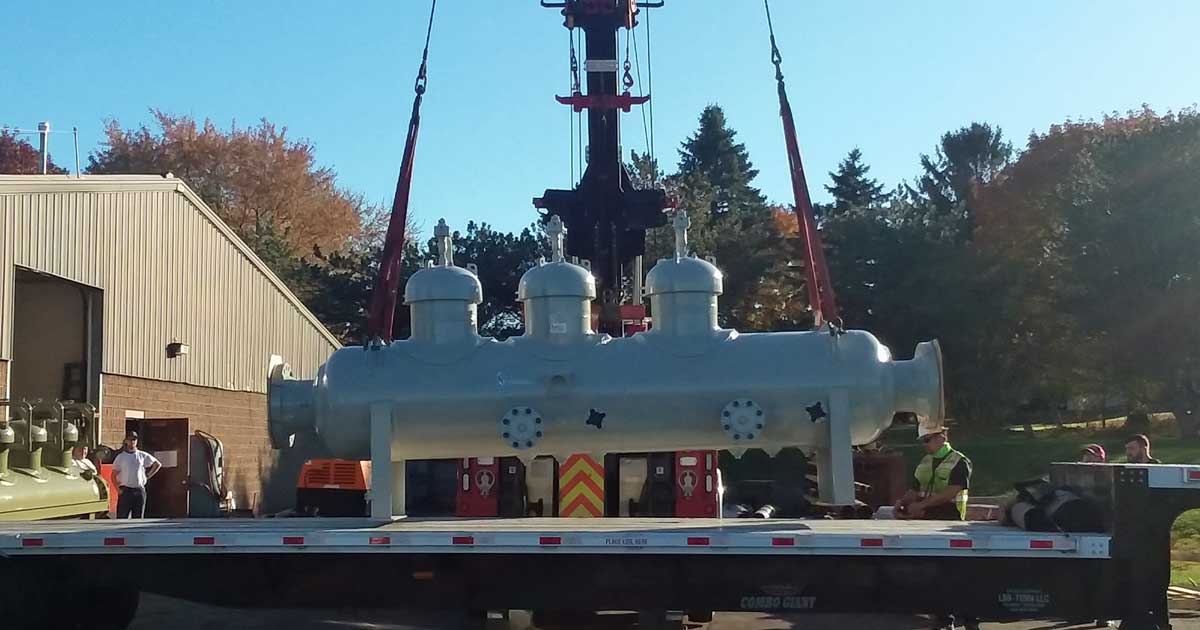
Shawndra R100 Horizontal Pipeline Coalescers
Natural gas is transported through a network of pipelines and, at times, even stored. The natural gas goes through a two-stage filtration through a compressor station, heated, and filtered again. Some contaminants within pipelines may be CO2, which is created by corrosion damage of the pipe.
Distribution
Natural gas makes its way to consumers through distributors, such as your local gas company. Methane loses pressure from friction as it flows through pipelines, so compressor stations must maintain high enough pressure to flow. A standard cleaning practice of pigging the lines may displace solid and liquid contaminants. Therefore, further filtration before and after compressor stations is necessary to remove both particulates and liquids.
How can we help you with your gas filtration?
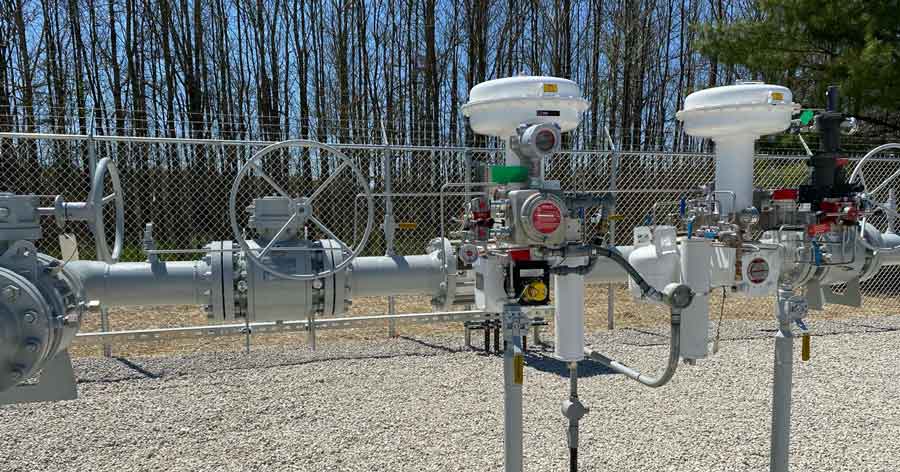 Like most natural ingredients, natural gas requires a bit of engineering and tweaking to safely deliver it to the market. At every production phase, methane is filtered multiple times to ensure safety and prevent damage to our pipelines. Without the filtration process, natural gas would not be the “clean fossil fuel” and best nonrenewable energy to bridge us to a sustainable energy future.
- Shawndra Products manufactures Sparks Filters (industrial air, natural gas filters, coalescers) for wellheads and pipeline applications.
- IMAC natural gas filter dryers (drier ) remove contaminants and dehydrates the gas before reaching instruments in gas lines.
- IMAC Systems inline strainers remove harmful debris from gas to protect downstream equipment. Natural gas strainer types include T strainers (or Tee), gasket strainers, cone strainers (witches hat), plate strainers, and more.





Great article. Learning new stuff every day. Thank you.
This is such a good read. It is an amazingly informative blog where a lot of things can be learnt about natural gas. It is really nice.
Wow
It is good information about the petroleum
This page is so useful